

Long Way Homestead - Breed of the Month - April 2025
- eve renaud
- Jan 14
- 3 min read


Spinning Rambouillet ☁️🐏
Breed Study – Month 4/12
If you’ve been following along, you know Long Way Homestead has a lot of white wools in this study. So anytime there’s a naturally colored fleece, I get extra excited. And April did not disappoint.
This month’s fiber was Rambouillet, and was the prettiest marled gray. I had never spun Rambouillet before, so I was really curious to see what this soft, ashy little cloud would turn into once it hit the wheel.

After doing a bit of research, I wasn’t too surprised (given the very French name) to learn that Rambouillet is indeed a French breed. Developed in 1786, when Spanish Merino sheep were imported by King Louis XVI to his estate in Rambouillet, France. Over time, those Merinos were cross bred with sheep already thriving in France’s colder, wetter climate. Creating a new breed that retained many Merino qualities but was slightly more woolly with a longer staple length, now known as Rambouillet.!
It eventually made its way to North America in the 1840s, where it became especially valued in western ranges for its hardiness and strong flocking behavior.
The fleece itself is elastic and springy, with a staple length of about 2 to 4 inches and fiber diameters ranging from 18 to 24 microns. White is by far the most common color, but some flocks do produce grays and blacks, which is where my gorgeous fleece got its color from.
Rambouillet is known for its tendency to felt and its higher grease content, so careful washing and prep are very important. Luckily, my fiber didn’t feel oily to the touch, which made me feel pretty confident going into this spin.

As always, before spinning I turned to Rachel Smith, and watched a video where she talks about spinning Rambouillet. I remember her mentioning that short forward draw worked especially well with this fiber, and since I almost always spin using a continuous backward draft, I decided to take that as a challenge and test both. When spinning my samples the difference was immediate. My backward draft felt familiar and comfortable, but the singles were much more cloudy and chaotic. Not very uniform at all. The short forward draw, on the other hand, gave me noticeably more consistent singles, even though it felt very unnatural at first. It was also clear at this stage that a three-ply was the way to go. it made the yarn more even, stable, and just looked better overall. Yet even working this fibre as a 3 ply, it would be a thin yarn. For me Rambouillet just wants to draft really thin.
I split the fiber into three sections and started my spin using a short forward draw. This was harder than I expected.... I kept catching myself slipping back into backward drafting and had to constantly remind myself "No! no long draw, no backward draft, short forward only." It was definitely a mental workout... haha.
Once plied and washed, the yarn bloomed beautifully. The color might be my favorite part of this spin. From far away it looks gray, but up close it’s actually a mix of brown and white fibers, giving it this really lovely gravel-like texture. It also feels very different from the other yarns in this study.
The finished yarn came out to about 12 WPI (wraps per inch), with a few slightly thicker and thinner spots here and there, and a twist angle around 40°. From the full 100 g, I ended up with 175 meters total.
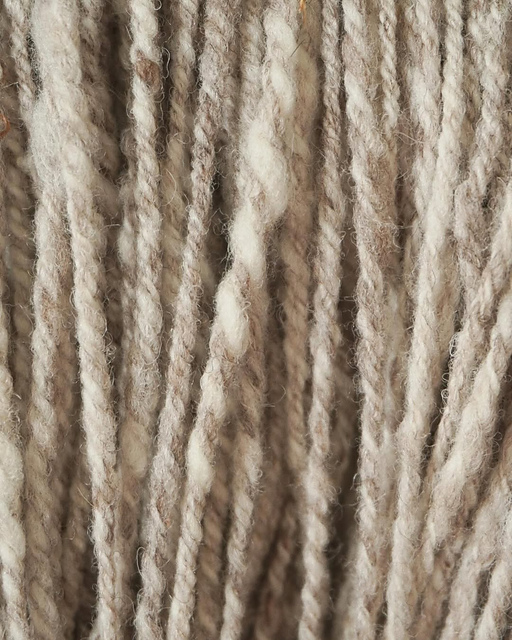
Spinning Rambouillet after Targhee and Polypay was especially interesting. Targhee still feels the closest in terms of bounce, while Rambouillet is a bit more woolly, a bit frizzier. Knowing that Rambouillet and Targhee are both part of the breeds that make up Polypay made this spin feel both familiar and really fun to explore.
Every month in this study seems to come with its own lesson. Targhee taught me about working with vegetable matter; Shetland taught me to accept nepps; and Rambouillet pushed me to learn short forward draw and focus on consistency.
This one challenged me, but it was such a rewarding spin, and I really love how the yarn turned out. 🤍 If you want to see the full process, from the wool to the final skein, it’s all in Spinning Rambouillet Wool 🌾✨ – Amazing Color | 12 Months of Handspun Yarn (Longway Homestead) on YouTube! 🎥


Comments